

ENGLISH STATEMENT
INTENT
 At Burghfield St. Mary’s our intention is to develop the children’s love of reading, writing and discussion through a quality English curriculum underpinned by the principles of Talk for Reading and Talk for Writing.
We aim to inspire an understanding and appreciation of our rich and varied literary heritage and a habit of reading widely and often. We want the children to become enthusiastic and critical readers of stories, poetry and drama, as well as non-fiction and media texts. We recognise the importance of nurturing a culture where children take pride in their writing, can write clearly and accurately, and develop an understanding of how language works by looking at its patterns structures and origins. We help them to adapt their language and style for a range of contexts across the curriculum.
We want to inspire children to be confident in the art of speaking and listening and be able to use discussion to communicate ideas, views and feelings as well as further their learning. We believe there should be clear progression as they advance through the primary curriculum providing a secure basis in literacy skills crucial to a high quality education as well as the life-long tools for success. Our curriculum closely follows the aims of the National Curriculum for English 2014.
The National Curriculum for English aims to ensure that all pupils:
- read easily, fluently and with good understanding
- develop the habit of reading widely and often, for both pleasure and information
- acquire a wide vocabulary, an understanding of grammar and knowledge of linguistic conventions for reading, writing and spoken language
- appreciate our rich and varied literary heritage
- write clearly, accurately and coherently, adapting their language and style in and for a range of contexts, purposes and audiences
- use discussion in order to learn; they should be able to elaborate and explain clearly their understanding and ideas
- are competent in the arts of speaking and listening, making formal presentations, demonstrating to others and participating in debate.
IMPLEMENTATION
At Burghfield St. Mary’s School we use a variety of teaching and learning styles in English lessons supported by the Talk for Writing and Talk for Reading principles. Our aim is to develop children’s knowledge, skills, and understanding in English through whole-class shared reading and writing, guided groups and independent activities, and be able to use and apply their learning in other areas of the curriculum. Our scheme of work is rigorous and well organised providing purposeful opportunities for reading, writing and discussion. It has been developed to ensure that all statutory requirements of the National Curriculum are taught.
Reading
 Reading sessions take place in all classes across the school in addition to English lessons. Talk for Reading is the guiding principle promoting whole class guided reading. In KS2, class sets of high quality reading books are provided to all the children to enable more in depth discussion in the classroom. In KS1 one book is shared through the visualizer. This ensures that all children, regardless of their ability to read, have access to the same high quality discussions over meaning and interpretation. These books are carefully chosen in line with Pie Corbett’s Reading Spine suggestions (see appendix B). Whole class guided reading takes place alongside guided groups. Guided groups use books matched to the children’s reading ability.
As well as the Talk for Reading and Writing texts used in English lessons and guided reading sessions, we teach the children to read fluently and accurately through a structured scheme based on Book Banding and individual choice. The children are expected to take home books to read on a regular basis. Daily opportunities are provided for children to read particularly in the early stages of reading development. Hearing children read individually allows teachers to assess and develop the child’s reading skills in fluency and pace, and to monitor their progress. As the children grow into more confident readers, further comprehension skills are developed.
Further Reading Opportunities
 Our school operates a ‘Reading Buddies’ scheme where the older children share books with the younger children.
From the library, the children are able to choose from a wide variety of fiction and non-fiction books. The upkeep of the library is supported by the library monitors in Year 5.
The importance of a positive reading environment is recognised through the provision of engaging ‘book corners’ in classrooms. This provides opportunities for individual selections during quiet reading sessions of a variety of fiction, non-fiction, poetry, dictionaries and thesauruses. The dictionaries and thesauruses are also used to support writing. Displays around the school also encourage and value a love of reading.
We also provide other opportunities, from hosting visiting authors, ensuring that children benefit from access to positive role models from the local and wider locality, participating and promoting World Book Day, sharing book reviews in Children’s assembly, participating in the local library Summer reading scheme and holding a Book fair twice a year where children and parents are able to purchase highly discounted books.
Writing

The Talk for Writing principles of Imitation, Innovation and Independent Application underpin the English lessons taught throughout the school (see appendix C). Through the process of cold and hot tasks, text mapping, editing (making additions, revisions, and proof reading) we teach the accurate use of spelling, punctuation and grammar in order to help children communicate their ideas clearly and confidently. Opportunities for writing are provided not just in English lessons but across the whole curriculum.
Handwriting
An agreed cursive handwriting style is taught throughout the school and is supported by ‘Letter-Join’, an interactive handwriting programme. See Appendix D for specific letter formation and application.
Spelling
The teaching of spelling follows the requirements of the National Curriculum. In FS2 and Year 1 the children use their phonic knowledge to spell. In Year 1, the children are taught to apply simple spelling rules. In Year 2 the children are taught alternative spellings for the GPCs already covered in Reception/Year 1. In KS1, the common exception words are continually taught and revised throughout the year and assessed termly. In KS2, the statutory word lists and spelling rules for each Year group are taught through The Herts for Learning Essential spelling scheme. Tests are also used to establish spelling ages.

Phonics
Daily Phonics lessons take place in FS2 and KS1. Reception and Year 1 classes use the Floppy’s Phonics programme to support the teaching of each phoneme. Year 2 revises the GPCs and covers the alternative spellings using Phonics International materials.

Speaking and Listening
The children are taught to listen to other speakers as well as develop their competence in communicating their ideas clearly, confidently in a variety of different contexts. We recognise the importance of valuing all contributions. The children talk through their ideas, explain to others and through talking, develop their understanding of whatever text is being studied.
IMPACT
The use of Talk for Writing in our school has provided all the children with opportunities to explore language patterns through oral storytelling and text learning.
“Talk for Writing is based on how children learn. It places the learner, through formative assessment, at the heart of the planning, teaching and learning process”.
Creating Storytellers and Writers - Pie Corbett & Julia Strong 2017
They can tell stories confidently through actions and have the skills to plan, write and improve their writing. Using high quality texts the children are able to hear language patterns, say them and explore them so they really know the patterns and vocabulary well. Through Talk for Reading, all of our children have access to high quality literature. This has meant that every child, regardless of their ability to read, has access to the discussions about vocabulary and meaning. Children’s skills in reading, writing, speaking and listening enable them to communicate and express themselves in all areas of their work in school.
We are developing a community of enthusiastic readers and writers who enjoy showcasing their emerging literacy knowledge and skills. They are confident to take risks in their reading and writing, and love to discuss and share their ideas.
 |
 |
 |
MATHEMATICS STATEMENT
INTENT
 At Burghfield St. Mary’s, we recognise the importance of fundamental mathematics as a tool for life. Our intention is for the majority of children to enjoy Mathematics and to experience success in the subject, with a developing ability to reason mathematically and solve problems. We believe that the majority of children can succeed in learning mathematics in line with national expectations.
The 2014 National Curriculum for Mathematics aims to ensure that all children:
- Become fluent in the fundamentals of Mathematics
- Are able to reason mathematically
- Can solve problems by applying their Mathematics
IMPLEMENTATION
The mathematics taught at Burghfield St. Mary’s, follows the year group requirements of the 2014 mathematics curriculum and reflects the principles of mastery mathematics based on research into primary mathematics teaching from NCETM. These principles help to shape how the curriculum is implemented:
- Teachers reinforce the expectation that all children are capable of achieving high standards in Mathematics.
- The large majority of children progress through the curriculum content at the same pace. They enter the lesson at the same point and work in mixed ability pairs to support and extend their thinking.
- The learning needs of individual pupils are addressed through careful scaffolding, skilful questioning and appropriate rapid in class feedback, in order to provide necessary support and challenge.
- Factual knowledge (e.g. number bonds and times tables) procedural knowledge (e.g. formal written methods) and conceptual knowledge (e.g. place value) are taught in a fully integrated way, with an awareness of the need for concrete, pictorial and abstract fluency. We am to build a deeper understanding of key underlying mathematical concepts.
- Sufficient time is spent on key concepts to ensure learning is developed before moving on. Units of mathematics and lesson content are carefully sequenced following recommendations from White Rose and adapted according to our children, in order to develop a conceptual pathway through the mathematics.
- The reasoning behind mathematical processes is emphasised. Teacher / pupil interaction explores how answers were obtained and why the method / strategy worked. Correct mathematical language is encouraged.
IMPACT
 Burghfield St. Mary’s mastery approach to mathematics ensures that all children experience a sense of success and achievement. We support the children in developing their collaborative and independent skills, as well as the confidence to think about and communicate mathematical ideas and concepts.
Regular and ongoing assessment within lessons informs teaching, with adults regularly checking pupils’ knowledge and understanding and intervening accordingly, to support and enable the success of each child. Gaps in pupils’ knowledge and understanding are quickly identified and addressed through in-class questioning, observations and subsequent support. Continual assessments are maintained through the detailed use of mark books and pupils’ target cards.
Teachers discuss their mathematics teaching regularly with colleagues, sharing teaching ideas and classroom experiences and working together to improve their practice. This is supported by a commitment to whole school professional development through the attendance at various mastery courses. These factors ensure that we are able to maintain high standards in mathematics across the school.
 |
 |
 |
 |

DESIGN AND TECHNOLOGY STATEMENT
INTENT
The Design and Technology curriculum at Burghfield St. Mary’s is designed as part of a broad and balanced education which meets the needs of all children. A scheme of work has been devised to help teachers ensure they have progressively covered the knowledge, understanding and skills required in the National Curriculum. The aim is to inspire children, through a broad range of practical experiences, to create innovative designs which solve real and relevant problems within a variety of different contexts. The design process encourages children to identify real and relevant problems, critically evaluate existing products and then take risks and innovate when designing and creating solutions to the problems. Where possible, time is built in to reflect, evaluate and improve on prototypes using design criteria throughout to support this process. Opportunities are provided for children to evaluate key events and individuals who have helped shape the world, showing the real impact of design and technology on the wider environment and helping to inspire children to become the next generation of innovators.
IMPLEMENTATION
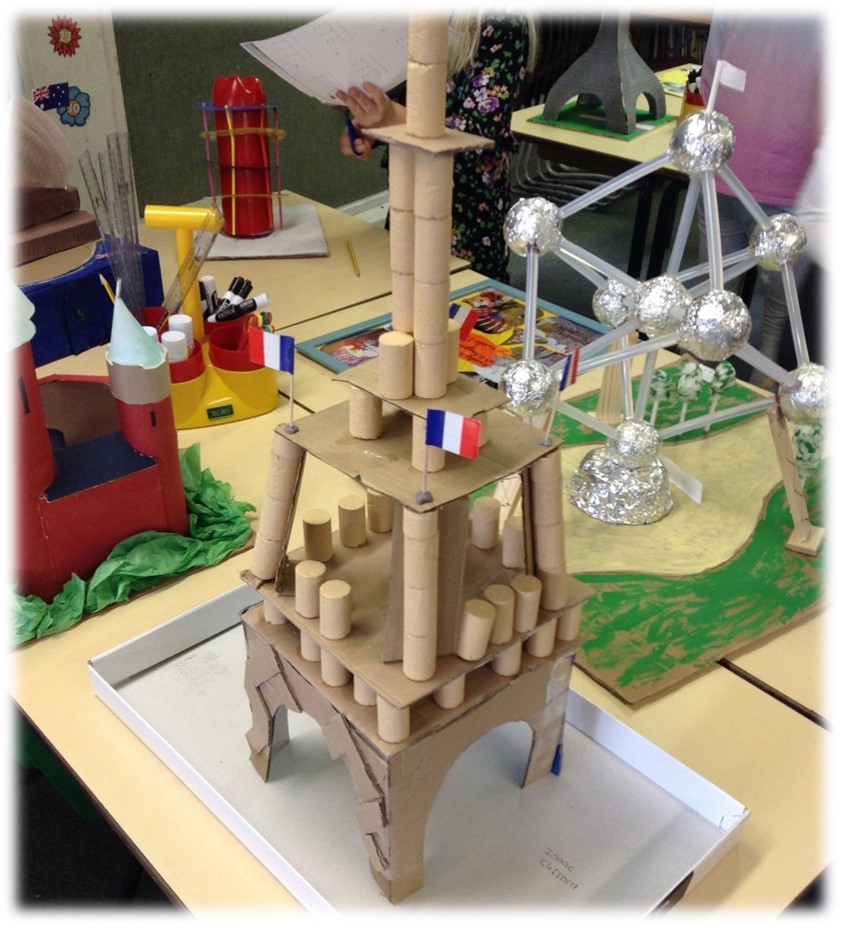 The two year rolling Design Technology plan incorporates the statutory requirements of the National Curriculum 2014 through opportunities which best meet the learning and developmental needs of the children in our school. Where appropriate, links are made between the Design Technology taught and our cross-curricular whole school topics. Through revisiting and consolidating skills, the skills progression map, suggested units and resources help children build on prior knowledge alongside introducing new skills, knowledge and challenge. The revision and introduction of key vocabulary is also built into lessons.
End of unit assessment is completed, recognising where outcomes have been met. We intend to inspire pupils and practitioners to develop a love of Design and Technology and see how it has helped shaped the ever-evolving technological world they live in.
IMPACT

Our curriculum design ensures that the needs of individual and small groups of children can be met within the environment of high quality first wave teaching. Regular, planned topics ensures the profile of Design and Technology is maintained. Children have the opportunity to improve their enquiry skills and inquisitiveness about the world around them, and the impact of design and technology on the world. Children become more confident in analysing their work and giving their opinion on their own and other works. Children show competences in improving their resilience and perseverance by continually evaluating and improving their work. Children in school can speak confidently about their design and technology work and their developing skills. We want to ensure that Design and Technology is enjoyed by teachers and pupils across school, therefore encouraging them to want to continue building on this wealth of skills and understanding, now and in the future.
 |
 |
GEOGRAPHY STATEMENT
INTENT
The Geography curriculum at Burghfield St. Mary’s is designed as part of a broad and balanced education which meets the needs of all children. Topics are informed by the national curriculum, our whole school cross-curricular themes and a desire to capture the children’s interest. The Geography curriculum at Burghfield St Mary’s is planned and structured to ensure that current learning is linked to previous learning. In line with the national curriculum 2014, the curriculum at Burghfield St Mary’s aims to: equip pupils with knowledge about diverse places, people, resources and natural and human environments, together with an understanding of the Earth’s key physical and human processes. As pupils progress, we hope to develop their growing knowledge about the world in order to help them to deepen their understanding of the interaction between physical and human processes, and of the formation and use of landscapes and environments.
IMPLEMENTATION
The two year rolling Geography plan incorporates the statutory requirements of the National Curriculum 2014 through opportunities which best meet the learning and developmental needs of the children in our school. Where appropriate, links are made between the Geography taught and our cross-curricular whole school topics. Geography is taught in blocks, so that children achieve depth in their learning, with the majority of objectives covered in our in depth term on ‘Continents.’ Consideration has been given to ensure progression across the topic throughout each phase across the school.
Cross curricular outcomes in Geography are specifically planned for. Planning is informed by and aligned with the national curriculum. Consideration is given to how greater depth will be demonstrated within lessons, as well as how learners will be supported in line with the school’s commitment to inclusion. Outcomes of work are monitored through assessment at the end of each topic to ensure that they reflect a sound understanding of the key identified knowledge. The Early Years Foundation Stage (EYFS) follows the EYFS Statutory framework education programme which aims for all children in Reception to have an Understanding of the World; people, cultures and communities, and the natural world by the end of the academic year.
IMPACT
Our curriculum design ensures that the needs of individual and small groups of children can be met within the environment of high quality first wave teaching. In this way it can be seen to impact in a very positive way on children’s outcomes.
Outcomes in topic books, evidence learning against the geography curriculum and demonstrate the children’s acquisition of identified key knowledge and skills. As children progress throughout the school, they develop a knowledge, understanding and appreciation of their local area and its place within the wider geographical context of the U.K. and the world as a whole.
 |
 |
HISTORY STATEMENT
INTENT
 The History curriculum at Burghfield St. Mary’s is designed as part of a broad and balanced education which meets the needs of all children. Topics are informed by the national curriculum, our whole school cross-curricular themes and a desire to capture the children’s interest. The history curriculum at Burghfield St Mary’s is planned and structured to ensure that current learning is linked to previous learning. In line with the national curriculum 2014, the curriculum at Burghfield St Mary’s aims to ensure that all pupils: Gain a coherent knowledge and understanding of Britain’s past and that of the wider world which helps to stimulate pupils’ curiosity to know more about the past; Are encouraged to ask perceptive questions, think critically, weigh evidence, sift arguments, and develop perspective and judgement; Begin to understand the complexity of people’s lives, the process of change, the diversity of societies and relationships between different groups, as well as their own identity and the challenges of their time.
IMPLEMENTATION

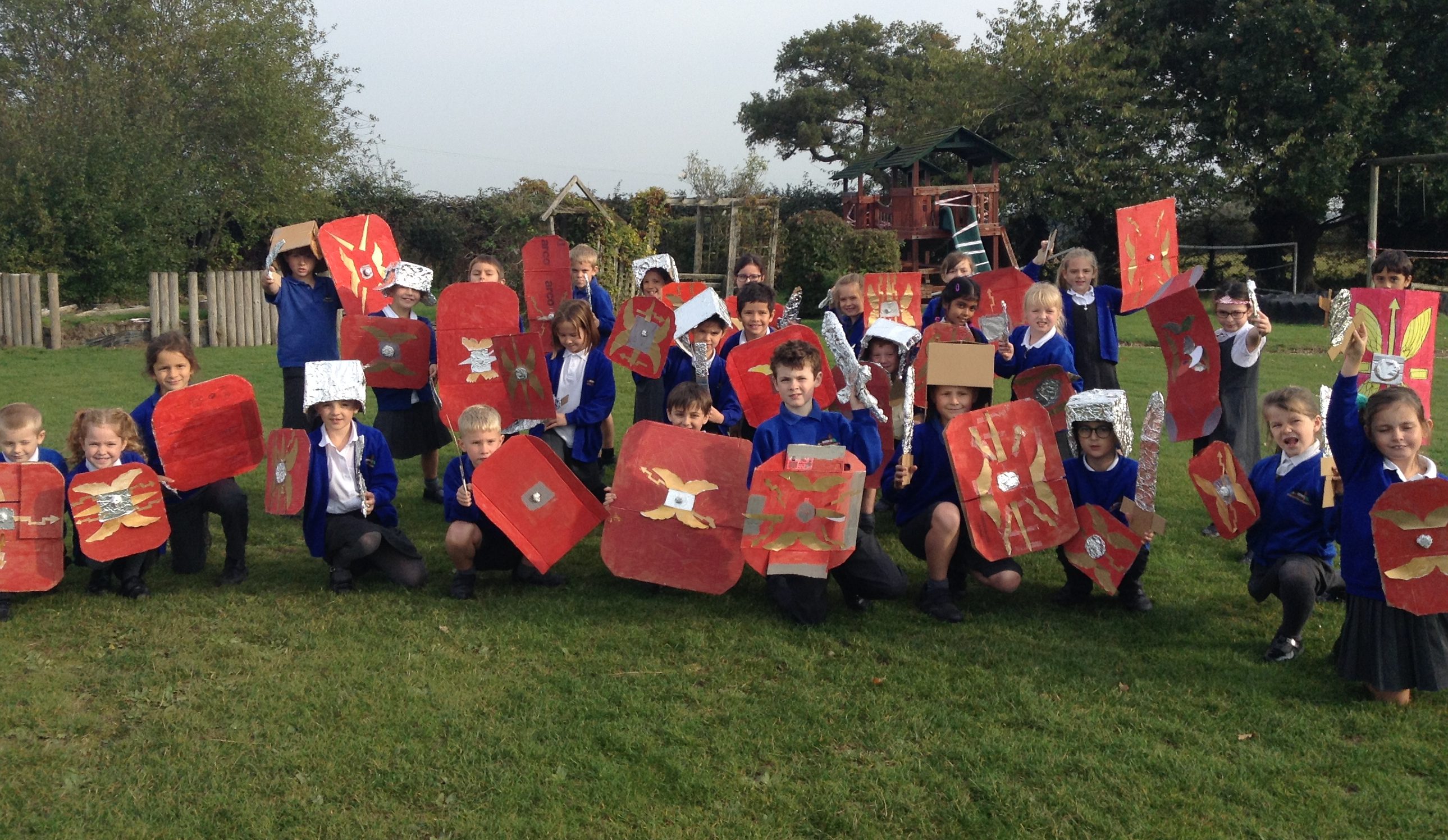
The two year rolling History plan incorporates the statutory requirements of the National Curriculum 2014 through opportunities which best meet the learning and developmental needs of the children in our school. Where appropriate, links are made between the History taught and our cross-curricular whole school topics. History is taught in blocks, so that children achieve depth in their learning. Teachers identify the key knowledge and skills of each topic and consideration has been given to ensure progression across topics throughout each phase across the school. Children are given the opportunity to develop a chronological understanding of British history from the Stone Age to the present day. They can draw comparisons and make connections between different time periods and their own lives. Interlinked with this are studies of world history, such as the ancient civilisations of Greece and the Mayans.
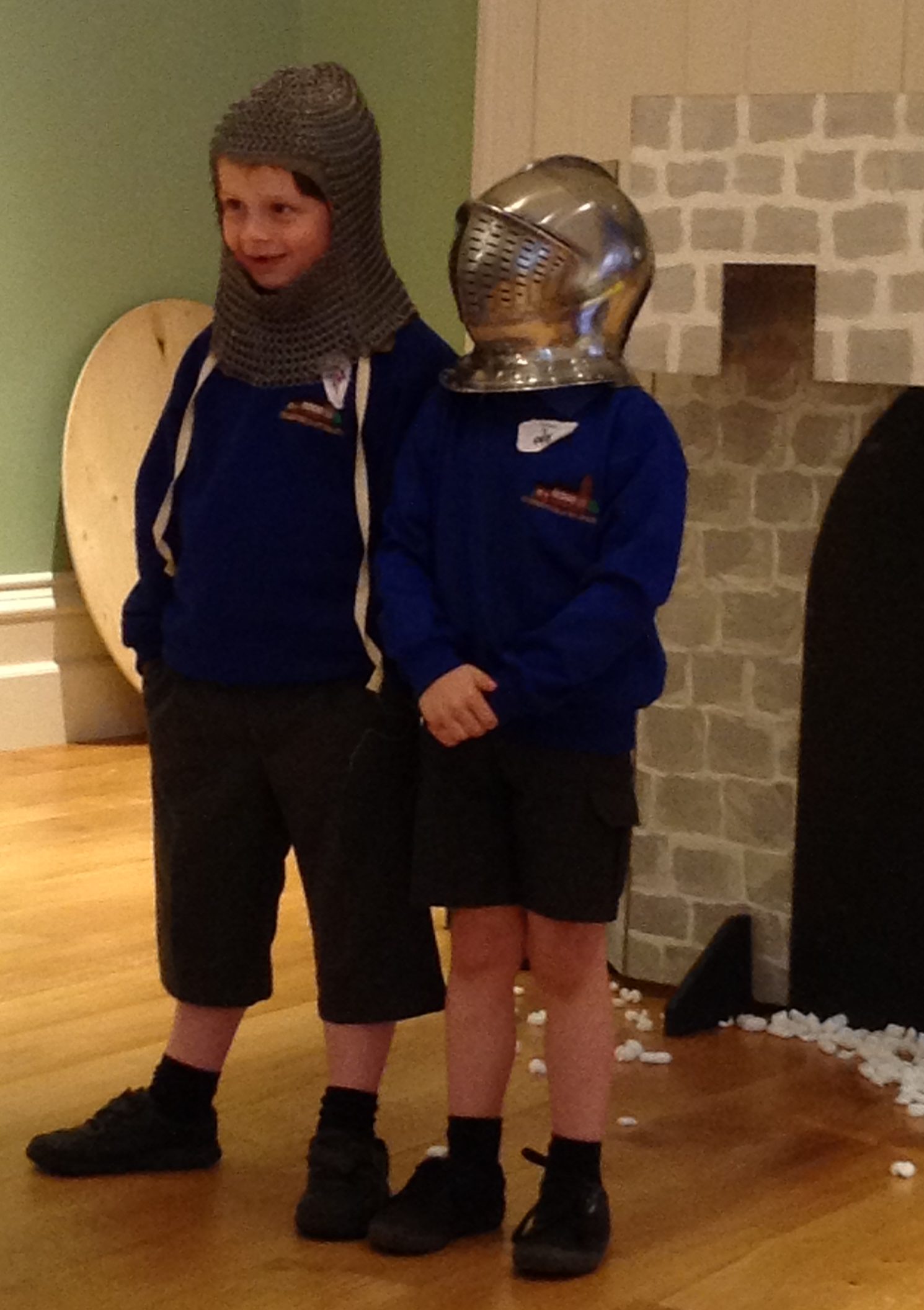
Cross curricular outcomes in history are specifically planned for. Planning is informed by and aligned with the national curriculum. Consideration is given to how greater depth will be demonstrated within lessons, as well as how learners will be supported in line with the school’s commitment to inclusion. Outcomes of work are monitored through assessment of each unit of work to ensure that they reflect a sound understanding of the key identified knowledge.
The Early Years Foundation Stage (EYFS) follows the EYFS Statutory Framework educational programme which aims for all children in reception to have an Understanding of the World; past and present, by the end of the academic year.
IMPACT
 Our curriculum design ensures that the needs of individual and small groups of children can be met within the environment of high quality first wave teaching. In this way it can be seen to impact in a very positive way on children’s outcomes.
History learning is embraced by teachers and pupils across school. Outcomes in topic books, evidence a broad and balanced history curriculum and demonstrate the children’s acquisition of identified key knowledge. Children have the opportunity to improve their enquiry skills and inquisitiveness about both Britain’s past and that of the wider world and are curious to know more about the past. Children become more confident in analysing their work and giving their opinion about historical events, people and time periods. They learn to ask perceptive questions, think critically, weigh evidence, sift arguments, and develop perspective and judgement.
 |
 |
MODERN FOREIGN LANGUAGES STATEMENT
INTENT
The Modern Foreign Languages (MFL) curriculum at Burghfield St Mary’s is designed as part of a broad and balanced education which meets the needs of all children. A high quality languages education should foster children’s curiosity and deepen their understanding of the world. At Burghfield St Mary’s we believe that experience of another language enables children to interpret, create and exchange meaning within and across cultures. We recognise that the skills, knowledge, and understanding gained through language learning enrich teaching and learning throughout the whole curriculum. The emphasis on language as a means of communication underpins children’s capabilities in oracy, which is critical to effective communication of ideas across a range of subjects, as well as being a key foundation for literacy. The teaching of French in KS2 provides an appropriate balance of spoken and written language and lays the foundations for further foreign language teaching at KS3.
IMPLEMENTATION
French lessons are taught weekly in KS2 and develop skills in the four core areas of speaking, listening, reading and writing. All classes will have access to a high-quality foreign languages curriculum using the Language Angels scheme of work and resources. This will progressively develop pupil skills in foreign languages through the lessons taught. Children will acquire, use and apply a growing bank of vocabulary, language skills and grammatical knowledge organised around age-appropriate topics and themes. The units taught at each stage of the academic year will be reviewed in detail annually as units are updated and added to the Language Angels scheme. Many of these units also allow for cross curricular linguistic and cultural links to subjects such as PSHE, RE or topic work.
Lessons offering appropriate levels of challenge and stretch will be taught at all times to ensure pupils learn effectively, continuously building their knowledge of and enthusiasm for the language they are learning. The planning of different levels of challenge is demonstrated in the various Language Angels ‘Teaching Type’ categories:
- Early Language units are entry level units and are most appropriate for pupils with little or no previous foreign language learning.
- Intermediate units increase the level of challenge by increasing the amount and complexity (including foreign language grammar concepts) of the foreign language presented to pupils. Intermediate units are suitable for pupils with embedded basic knowledge of the foreign language.
- Progressive and Creative Curriculum units are the most challenging units and are suitable for pupils with a good understanding of the basics of the language they are learning.
Grouping units into these ‘Teaching Type’ categories ensures that the language taught is appropriate to the level of the class and introduced when the children are ready. Grammar is integrated and taught discreetly throughout all appropriate units. Formative assessment in each lesson forms the basis of teacher judgements against the relevant KS2 attainment targets but is also enriched by numerous opportunities for peer- and self-assessment. Evidence of attainment in listening, reading and writing is gathered in each child’s languages folder.
IMPACT
Our MFL curriculum ensures that language learning is accessible and enjoyable for all children. Learning a language enriches the curriculum, providing excitement and interest for children and teachers, helping to create enthusiastic learners and to develop positive attitudes to language learning throughout life. In lessons, children approach a broad range of learning activities in a new and challenging context; gaining pride and a sense of achievement, developing confidence and self-esteem. Children become effective communicators who develop an appreciation of language as a tool to convey meaning. Learning a foreign language acts as a stimulus for children to investigate questions of identity and community, as well as giving them a new perspective on their own language(s). Children’s enthusiasm for language learning also celebrates the range of home languages spoken by families of the school community.
 |
 |
MUSIC STATEMENT
INTENT
The National Curriculum for music aims to ensure that all pupils:
• Perform, listen to, review and evaluate music
• Be taught to sing, create and compose music
• Understand and explore how music is created, produced and communicated.
 At Burghfield St. Mary’s the intention is that children gain a firm understanding of what music is through listening, singing, playing, evaluating, analysing, and composing across a wide variety of historical periods, styles, traditions, and musical genres. Our aim is to develop an understanding of the importance of all types of music and the associated elements. We endeavour to teach the children to understand the value and importance of music in the wider community, and be able to use their musical skills, knowledge, and experiences to involve themselves in music, in a variety of different contexts. (See Appendix A)
IMPLEMENTATION
 The music curriculum is delivered through a well-structured scheme of work, Sing Up Music, which ensures students sing, listen, play, perform and evaluate. This is embedded in the weekly classroom lessons as well as the weekly singing assemblies, various concerts and performances, the learning of instruments, and the joining of one of our extra-curricular groups.
The elements of music are taught through the classroom lessons so that the children are able to use the language of music to describe what they hear, and to understand how it is made, played, and appreciated.
They also learn how to compose, furthering their understanding when listening, playing, or analysing music. In both Key Stage 1 and 2, all the children learn how to play the recorder as well as percussion instruments.
In Key Stage 2, year 4 children also have the opportunity to learn an instrument as part of Berkshire Music Trust’s ‘In2music’ instrumental project. FS2 children sing daily and have access to standard and improvised musical instruments. Listening and appraising well known pieces and appreciating their place in history is enhanced by weekly discussions using the BBC Ten Pieces resources and the suggested repertoire in Appendix 2 and 3 of the Model Music Curriculum.
IMPACT
The varied opportunities provided by our school, allow the children to develop self-confidence, interaction with and awareness of others, cooperation, resilience, achievement, determination, communication and a sense of community. It also helps to develop an understanding of culture and history, both in relation to students individually, as well as ethnicities from across the world.
Many of our pupils learn a wide variety of instruments through peripatetic teaching in and out of school and a number have gone on to join local groups, particularly those provided by Berkshire Music Trust Hub and further afield such as The National Youth Orchestra of Great Britain.
 |
 |
 |
Appendix A
School Ensembles
- School Choir
Events and showcase
- Year 4 – Junior Music Festival (annually Autumn Term) at The Hexagon, Reading
- Year 3 – Junior Music Festival (annually Spring Term) at The Hexagon, Reading
- Year 5 & 6 – Young Voices (every two years January) at The O2, London
- Large choir ensemble at the Albert Hall, London (every 4 – 5 years)
- Annual Christmas Tree Festival at St. Mary’s Church Burghfield
- The Willink Primary school concert
- Children’s Assembly (weekly)
- Infant production (Christmas)
- Junior production (Summer)
Instrumental lesson provision
- Y1 – 6 Recorders
- Year 4 In2music, Berkshire Music Trust
- Peripatetic teaching – piano, strings, brass
Resources
- Berkshire Music Trust hub
- Sing Up
- BBC Ten Pieces
- ABRSM Classical 100
PSHE STATEMENT
INTENT
In line with the National Curriculum 2014, all schools must provide a curriculum that is broadly based, balanced and meets the needs of all pupils. Under section 78 of the Education Act 2002 and the Academies Act 2010, a PSHE curriculum:

• Promotes the spiritual, moral, cultural, mental and physical development of pupils at the school and of society, and
• Prepares pupils at the school for the opportunities, responsibilities and experiences of later life.
The National Curriculum advises schools to make provision for personal, social, health and economic education (PSHE), drawing on good practice. PSHE is considered across the curriculum and is a fundamental part of the children’s school experience. They have access to positive role models from the community and this supports their learning in many areas, including religious education. We believe that successful PSHE supports children’s learning capacity and promotes wellbeing, underpinning children’s development as people.
The school is a member of the DfE funded PSHE association. We aim to ensure that all children:
• Develop confidence and responsibility and to make the most of their abilities
• Prepare to play an active role as citizens in Britain
• Develop a healthy, safer lifestyle
• Develop good relationships and to understand and celebrate the differences between people.
IMPLEMENTATION
We follow the SCARF Programme, which offers a comprehensive, carefully thought-through scheme of work which brings consistency and progression to our children’s learning in this curriculum area. Scarf covers all areas of PSHE for the primary phase including statutory Relationships and Health Education. Each year group covers the following areas: Me and My Relationships; Valuing Difference; Keeping Myself Safe; Rights and Responsibilities; Being my Best; Growing and Changing.
PSHE lessons are taught every week. These explicit lessons are reinforced and enhanced in many ways which include: School Assemblies; School Values; Praise and reward systems including The Gem Project; Emotional Coaching; Positive respectful relationships across the school. We aim to apply what is learnt to everyday situations in the school community.
Furthermore, the school offers mental health and well-being support to families and children through signposted organisations and organised workshops involving the Educational Psychology Service and the Emotional Health Academy. School has a trained ELSA (Emotional Literacy Support Assistant) who provides additional support to children.
IMPACT
The school has established and maintained a positive learning environment where the children have positive relationships with their peers and teachers. The children are able to share with adults and their peers important life skills and emotions within a safe environment. The School Council are encouraged to make decisions on behalf of their peers to help improve the school environment and fund raise through charities to help others who are less fortunate than themselves. Activities are always organised for national events such as Children in Need and Comic Relief. Some of the children organise a regular Food Bank collection. As part of the Sandwell Project (organised with the EP Service) the children, parents, staff and other stake holders participated in prioritising projects within the school to promote well–being e.g. playground quiet area, inviting parents to assemblies when their children were receiving Head teacher’s Certificates, class responsibilities for organising lunchtime toy-shops.

ART AND DESIGN STATEMENT
INTENT
The Art and Design curriculum at Burghfield St. Mary’s is designed as part of a broad and balanced education which meets the needs of all children. A structure and sequence of lessons is followed, to help teachers ensure they have covered the skills required to meet the aims of the national curriculum. The intent is to ensure all pupils are engaged with the subject and produce creative, imaginative work. Children have the opportunity to explore their ideas and record their experiences, as well as exploring the work of others and evaluate different creative ideas. Children will increasingly become confident and proficient in a variety of techniques including drawing, painting, sculpting, as well as other selected craft skills, e.g. collage, printing and patterns. Children will also develop their knowledge of famous artists, designers and craft makers. The opportunities planned will also provide the chance for children to develop their emotional expression through art, to further enhance their personal, social and emotional development.

IMPLEMENTATION
 The two year rolling Art plan incorporates the statutory requirements of the National Curriculum 2014 through opportunities which best meet the learning and developmental needs of the children in our school. Where appropriate, links are made between the Art taught and our cross-curricular whole school topics. The planned activities, suggested resources and end of unit assessment, give the teacher leading art confidence in progression of skills and knowledge, recognising where outcomes have been met. Each key stage (EYFS, KS1, LKS2, UKS2) focuses on different themes to ensure continued interest in the subject as well as acquiring new knowledge.
The content suggested develops pupils’ techniques, including their control and their use of materials, with creativity, experimentation and an increasing awareness of different kinds of art, craft and design. Pupils are also introduced to how art and design both reflect and shape our history, and contribute to the culture, creativity and wealth of our nation.
IMPACT
Our curriculum design ensures that the needs of individual and small groups of children can be met within the environment of high quality first wave teaching. In this way it can be seen to impact in a very positive way on children’s outcomes.
Art and design learning is embraced by teachers and pupils across school. All children are encouraged to use technical vocabulary and are encouraged to know, apply and understand the skills and processes specified. Children have the opportunity to improve their enquiry skills and inquisitiveness about the world around them, and the impact of art and design on the world. Children become more confident in analysing their work and giving their opinion on their own and other works of art. Children show competences in improving their resilience and perseverance by continually evaluating and improving their work. Children in school can speak confidently about their art and design work and their developing skills.
 |
 |
 PHYSICAL EDUCATION OVERVIEW
RELIGIOUS EDUCATION STATEMENT
INTENT
 The Religious Education (RE) curriculum at Burghfield St Mary’s is designed as part of a broad and balanced education which meets the needs of all children. As a Church of England school, our vision is underpinned by Christian values and the teaching of RE plays an important role in in promoting the spiritual, moral, social, and cultural development of our children.
At Burghfield St Mary’s we recognise the unique role that RE plays within the curriculum. We share the belief that RE “provides a space for learning about people, about cultures and faiths and also relationships, tolerance, understanding and appreciation of others’ beliefs and values.” (Pan-Berkshire Agreed Syllabus for Religious Education, 2018-2023.)
The aims of Religious Education are to help children:
- develop an awareness of spiritual and moral issues in life experiences;
- develop knowledge and understanding of Christianity and other major world religions and value systems found in Britain;
- develop an understanding of what it means to be committed to a religious tradition;
- be able to reflect on their own experiences and to develop a personal response to the fundamental questions of life;
- develop an understanding of religious traditions and to appreciate the cultural differences in Britain today;
- develop investigative and research skills and to enable them to make reasoned judgements about religious issues;
- have respect for other peoples’ views and to celebrate the diversity in society.
IMPLEMENTATION
 Religious Education at Burghfield St Mary’s follows the Pan-Berkshire agreed syllabus for RE in conjunction with Diocesan guidelines. We have chosen to use an enquiry-based approach to the teaching of RE, supported by the Discovery RE scheme of work. Each unit of work begins with a ‘Key Question’, encouraging children to think about their own views and values in relation to the themes and topics studied in the RE curriculum. “This approach takes very seriously the philosophy that children are free to make their own choices and decisions concerning religion and belief. RE does not try to persuade but rather to inform and develop the skills with which evaluation can take place.” (Discovery RE, 2020.)
At Burghfield St Mary’s School we develop the children’s knowledge and understanding of the major world faiths, and we address the fundamental questions in life, for example, the meaning of life and the existence of a divine spirit.
 We recognise the fact that all classes in our school have children of widely differing abilities, and so we provide suitable learning opportunities for all children by matching the challenge of the task to the ability of the child.
Knowledge and skills acquired in RE lessons are supported by first-hand experiences, including visits to local places of worship and visits from faith communities, helping to embed mutual respect and tolerance for those of different faiths and beliefs.
IMPACT
We believe that through effective RE teaching we enable children to investigate and reflect on some of the most fundamental questions asked by people of many different faiths and cultures. We enable children to develop a sound knowledge not only of Christianity but also of other world religions, especially those that are the main faiths of children within our school. Children reflect on what it means to have a faith and to develop their own spiritual knowledge and understanding. We help the children learn from religions as well as about religions. Our teaching enables children to extend their own sense of values and promotes their spiritual growth and development.
 |