
 Our school dates back to 1837 when it was opened as a National School occupying premises adjacent to the Village green. This original thatched building still survives as a private house.
Soon after it was opened the school was united with the Oxford Diocese and has retained the character of a Church School ever since. In 1872 Mr William Benyon, a local landowner, constructed the building, which now houses the school.
Despite an extensive fire and some alterations over the years, the main building retains much of its Victorian character.

OUR SCHOOL VISION STATEMENT AND AIMS
At Burghfield St Mary’s we create a caring Christian learning environment that inspires each individual in the school community to fulfil their unique potential and become a responsible, concerned and active member of God’s world. (based on Philippians 4:13 'I can do all things through Christ because he gives me strength.')


School Day
| 08:30 | Early drop off |
| 08:55 | Start of the school day and registration |
| 10:30 - 10:45 | Morning Playtime |
| 12:00 | FS2 and Infant Lunchtime |
| 12:10 | Junior Lunchtime |
| 13:10 | End of Lunchtime |
| 15:10 | FS2 Home Time |
| 15:15 | End of the school day |

SIAMS
SIAMS Inspection
All Church of England dioceses and the Methodist Church use the Church of England Education Office's framework for the Statutory Inspection of Anglican and Methodist Schools (SIAMS) under Section 48 of the Education Act 200..The SIAMS Evaluation Schedule sets out the expectations for the conduct of the Statutory Inspection of Anglican, Methodist and ecumenical Schools under Section 48 of the Education Act 200.
SIAMS inspection focuses on the impact of the Church school's Christian vision on pupils and adults. This involves looking at the school’s Christian vision, the provision the school makes because of this vision and how effective this provision is in enabling all pupils to flourish. Church schools will employ a variety of strategies and styles appropriate to, and reflective of, their particular context in order to be distinctively and effectively Christian in their character and ethos. SIAMS inspectors therefore do not look for a set template of what a Church school should be like, but rather take the particular context of the school into account and base their evaluation on the outcomes rather than the process.
The Evaluation Schedule has one inspection question: “How effective is the school’s distinctive Christian vision, established and promoted by leadership at all levels, in enabling pupils and adults to flourish?”
Our most recent report : BURGHFIELD SIAMS Report 2019 pdf
More useful information can be found at:


At Burghfield St Mary’s we create a caring Christian learning environment that inspires each individual in the school community to fulfil their unique potential and become a responsible, concerned and active member of God’s world.
(based on Philippians 4:13 'I can do all things through Christ because he gives me strength.')
Our values of RESPECT shows the children the pathway to a happy and successful school.

Please see our Statutory Information page to view our School Development plan as well as School policies.
Please visit our Curriculum page to view our RE syllabus.

Our Year 6 Collective Worship Leaders, the Head Boy and Head Girl, play an important role in supporting our school’s Christian ethos in line with the Oxford Diocese and our role as a Church of England School.
They help to lead our daily Collective Worship by lighting the candles to represent the Father, the Son and the Holy Spirit, creating a calm and reflective atmosphere for everyone.
They also choose and read a closing reflection prayer, encouraging the school community to think deeply and spiritually.
Through these responsibilities, they develop confidence, leadership and a sense of service to others.
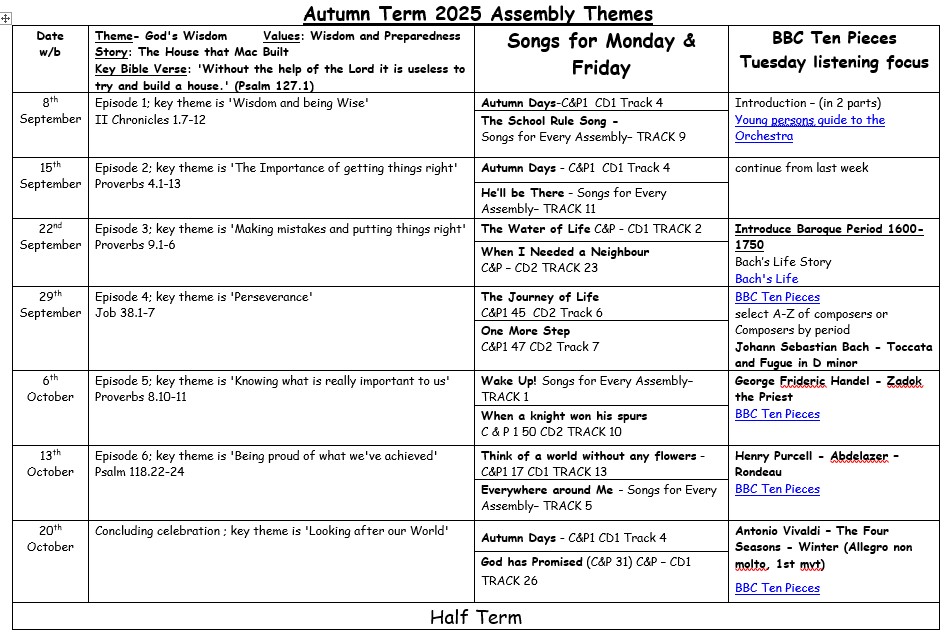
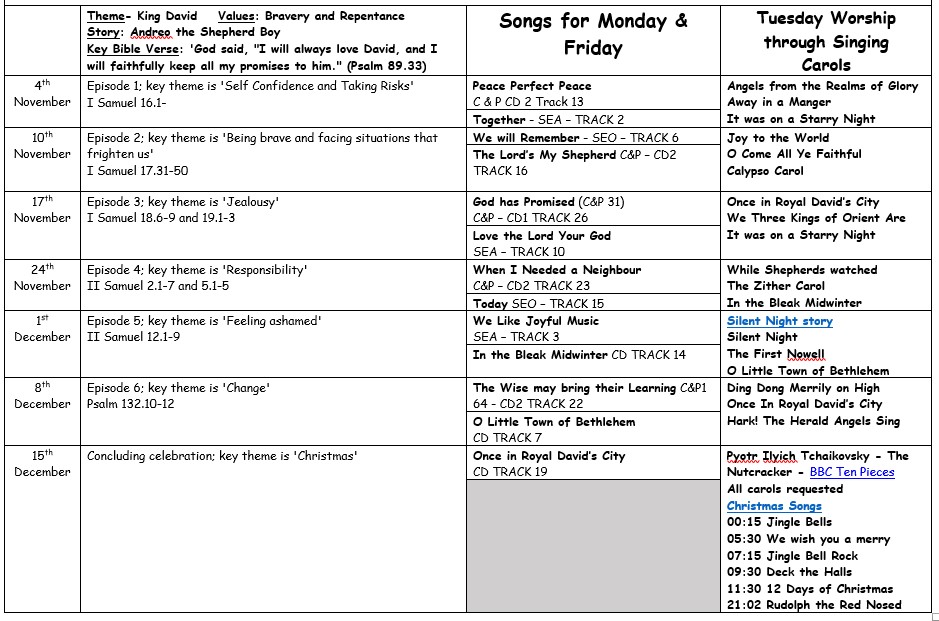
St Mary’s Church, Burghfield - Reverend Glynn and her team visit our school every Thursday morning to lead the assembly.
Our whole school visits St Mary’s Church every half term for special services, with parents invited to join, too.
Our children enjoy celebrating Easter, Nativity and the Year 6 Leavers’ Service at St Mary’s church each year.
For more information about the church, follow this link

We participate in our local village ceremony for Rememberance Day by laying a wreath.
- Incorporate mindfulness and reflection: Using practices like mindfulness, meditation, or quiet reflection time to help children connect with their inner selves.
- Encourage questions and discussion: Creating a safe space for children to ask "Big Questions" about life, nature, and the world around them.
- Foster a sense of community: Helping children to understand and value their connection to others by promoting empathy, compassion, and respect for different beliefs and values.
- Explore creativity and the arts: Using art, poetry, music, and drama to provide creative outlets for children to express their thoughts and feelings about the world.
- Teach about values and ethics: Integrating discussions on values like trust, gratitude, and social responsibility through Personal, Social, Health, and Economic (PSHE) education.
- Engage with nature: Promoting a love for the natural world by spending time outdoors, which can foster a sense of awe and wonder.
- Developing a personal belief system: This includes forming a set of values and beliefs that guide their perspective on life, which may or may not be religious.
- Appreciating the intangible: Developing an appreciation for things like beauty, truth, goodness, and mystery.
- Developing self-awareness: Growing in their understanding of their own emotions, their place in the world, and their relationships with others.
- Being reflective: Developing the ability to reflect on their experiences and learn from them.
- Showing empathy and compassion: Developing a sense of concern for others and a willingness to help them.
This is explored through seven strands:
- Vision and Leadership
- Wisdom, Knowledge, and Skills
- Character Development: Hope, Aspiration, and Courageous Advocacy
- Community and Living Well Together
- Dignity and Respect
- Impact of Collective Worship
- Effectiveness of Religious Education.
One overall grade is awarded reflecting the contribution of these strands to the flourishing of pupils and adults in a Church school. In addition a standalone grade is awarded in all schools for collective worship and in voluntary aided (VA) schools and former VA schools for religious education (RE). This grade is based on teaching and learning alone.
BURGHFIELD SIAMS Report 2019 pdf